


Yes, and Contrary To Popular Belief, Technology Can Strengthen the Parent/Child Relationship!

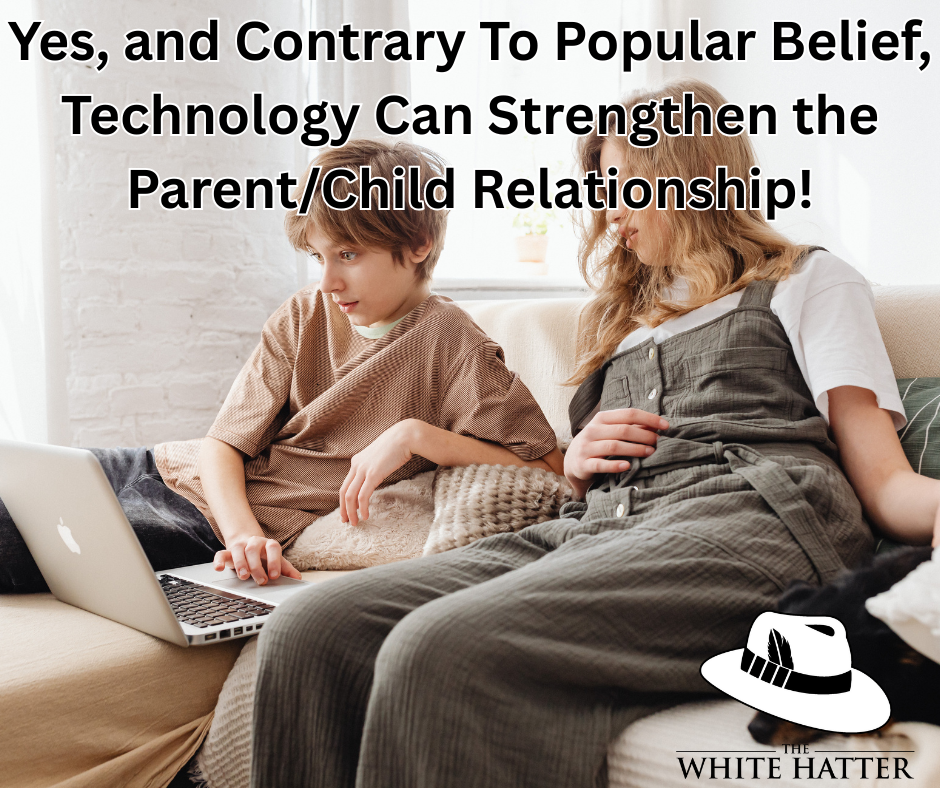
Much of the public conversation around youth, teens, and technology focuses on conflict such as, screens cause arguments, phones pull kids away, and social media creates distance. Those concerns are not imagined, but they are incomplete. In our work with families across Canada, we also see technology used in ways that strengthen the parent/child relationship, especially when adults stay involved, curious, and present. The difference is not the device, we believe it’s the family relationship wrapped around the technology.
One of the most effective approaches we see is something we have called joint media engagement. In simple terms, it means participating in your child’s digital world with them instead of watching it from a distance or trying to control it from above.
This can start with something as simple as sitting beside your child while they play a game. Rather than focusing on how long they have been playing or whether you approve of the game itself, instead you ask what they enjoy about it, what keeps them coming back, what feels challenging, and what feels social. These conversations give you insight into what the game is meeting for them emotionally and socially, while also showing your child that their interests matter to you.
It can also mean watching short form videos together, even if the content is not something you would normally choose for yourself. Laughing at what they find funny, pausing when something feels awkward, or gently asking what they think about a trend creates space for discussion. Without making it a lecture, you can talk about humour, body image, values, or why certain content makes people uncomfortable. These moments often lead to deeper conversations later.
Another powerful approach is asking your child to teach you how they believe a platform works. When you let them explain features, algorithms, or social norms, you shift the dynamic from authority to collaboration. Youth and teens often know more about the mechanics than adults, and inviting them to share that knowledge builds confidence and trust. It also gives you a clearer picture of how the platform actually functions, rather than relying on assumptions or headlines.
When parents and caregivers engage this way, technology becomes a shared space rather than a battleground. Conversations about values, ethics, relationships, and decision making start naturally, without lectures or fear based warnings. You are not giving up oversight. You are guiding in real time, with context.
Joint engagement allows parents to “overwatch” rather than hover. You gain insight into what your child is seeing, who they are interacting with, and how they respond emotionally, without turning the home into a surveillance state.
This matters because youth and teens are far more likely to talk to adults who show interest rather than suspicion. When youth and teens feel respected, they bring questions forward earlier. When they feel monitored, they hide. Trust does not mean blind permission, it means shared understanding.
It is also important for parents and caregivers to understand, and help their children understand, how many digital platforms are designed. Social media companies and game developers make decisions based on profit, not child development. Attention is the product (now with AI it also includes affection). Time on platform is the goal and because of that, many systems are intentionally built to keep users engaged longer than they planned.
Common examples include:
Push notifications designed to interrupt
Infinite scrolling that removes natural stopping points
Auto-play that keeps content flowing
In-app purchases and reward loops
Time-pressure mechanics in gaming like “act in the next five minutes to win”
These are often referred to as dark patterns. They are not accidents, they are purposely designed, and they work because they exploit human psychology. Companies could reduce or remove them, but doing so would affect revenue. This is also why age gating alone does not solve the problems because the design remains the same. This is where joint engagement becomes powerful.
Instead of shielding children from these systems entirely, parents and caregivers can help youth and teens see and understand them. You can point out when a notification is trying to pull attention. You can pause and ask why a game creates urgency. You can talk about how algorithms learn from their behaviour.
These conversations build real digital literacy. Youth and teens learn how technology influences emotions, choices, and habits. They begin to recognize when they are being nudged or manipulated. That awareness stays with them long after parental controls are removed. This is not about normalizing everything online, it’s about equipping youth and teens with understanding rather than relying on restriction alone.
We continue to believe that strong parent child relationships are the most reliable safety tool families have when it comes to technology. When parents and caregivers stay engaged, technology becomes a bridge instead of a wedge. Youth and teens learn that they do not have to navigate the online world alone and that questions are welcome, not punished.
At The White Hatter, we often remind families that we do not parent screens, we parent children. Technology will continue to change and platforms will come and go. The relationship you build through curiosity, shared experience, and conversation is what lasts.
Used thoughtfully, technology can do more than entertain, distract. or harm. It can open doors to connection, learning, and trust, when parents and caregivers choose involvement over avoidance, and that is a choice we should take a hold of an run with because technology is here to stay.
Digital Food For Thought
The White Hatter
Facts Not Fear, Facts Not Emotions, Enlighten Not Frighten, Know Tech Not No Tech


