


When Curiosity Becomes the Hook: New School Year New Concerning Apps


Caveat - Thank you to the students who connected with us to bring these two apps to our attention
Once again, anonymous social apps are gaining attention among students this new school year that parents, caregivers, and educators may want to have on their radar. Two of the more popular ones that have come to our attention are called “Peek” (which has been around for about two years now) and “Valid” (which appears to be an app released earlier this year). Like several anonymous compliment and polling apps that have come before it, much of their appeal appears to be built around something incredibly powerful, especially for young people, that being CURIOSITY!


The basic idea can sound relatively harmless, students can receive anonymous compliments, votes, or responses connected to people within their school community. Someone may indicate that they think you are attractive, funny, popular, kind, or interesting, but you may not immediately know who selected you, and that uncertainty can become the hook.
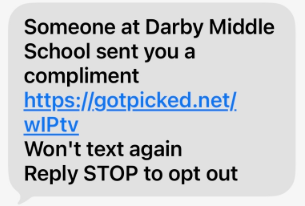
For a youth or teen, receiving a notification suggesting that someone at school has said something positive or negative about them naturally creates a question, “Who was it?” That question can be difficult to ignore, particularly during adolescence when peer acceptance, friendships, social status, romantic interests, and belonging can carry significant emotional weight.
Peek and Valid are part of a category of apps built around anonymous or semi-anonymous social interaction within school communities. Students may be asked to identify their school, connect with classmates, provide access to contacts, or invite other students to participate.
The more students from a particular school who join, the more socially useful and engaging the platform can become. This creates a built in incentive for existing users to recruit friends and classmates. Parents, caregivers, and educators should understand that this type of design is not simply about allowing students to exchange compliments, the social network itself becomes part of the product.
When an app asks a young person to identify their school, access their contacts, invite classmates, or connect their social world to the platform, there are legitimate privacy questions worth asking. What information is being collected? How is it being used? How long is it retained? Who can see it? Is contact information uploaded to company servers? Can a student meaningfully participate without providing access to additional personal information? These are questions we encourage parents and caregivers to explore with their kids before simply clicking “allow” when an app requests access.
Another important part of this model is the ability to monetize the desire to know who is behind an anonymous interaction. Imagine receiving a notification saying someone at your school thinks you are attractive or has selected you in a positive poll. The compliment feels good, but now you want to know who said it. If discovering additional clues about that person’s identity is connected to a paid feature, curiosity has effectively become part of the business model.
For adults, spending a few dollars to satisfy that curiosity may not seem particularly significant. For a 13, 14, or 15 year old, however, the emotional pull can be much stronger because the question is connected directly to their real-world peer group.
Who likes me?
Who thinks I’m attractive?
Was it the person I have a crush on?
Was it someone in my class?
This is where we believe parents, caregivers, and educators should look beyond what an app does and examine how its design encourages continued engagement or spending.
We also need to consider what happens when anonymous or semi-anonymous communication is introduced into an existing school social environment. Anonymous compliment apps often begin with a positive premise. Giving someone a compliment can certainly be a good thing. However, anonymity can very quickly change behaviour. The same mechanisms that allow students to anonymously say something kind can potentially be weaponized and contribute to teasing, rumours, exclusion, harassment, bullying, social manipulation, or attempts to embarrass another student.
There is also the possibility of students attempting to manipulate the system by creating accounts, coordinating responses with friends, impersonating others, or using information obtained through the app to fuel conflicts that continue at school or on other platforms.
This is why we caution against evaluating an app solely according to its advertised purpose. The better question is, “How could this technology be used differently from the way its creators intended?” That is an important digital literacy question for both adults and young people.
Discovering Peek or Valid on your child’s phone does not necessarily require an immediate confrontation or deletion of the app. It can provide an opportunity for a useful conversation. Ask your child what they like about it, what students at their school are using it for, whether anyone has experienced something uncomfortable or embarrassing because of it, what information they provided when they joined, whether they allowed access to their contacts, whether the app has encouraged them to pay money to discover someone’s identity, and most importantly, ask them how receiving these anonymous notifications makes them feel.
Do they find them fun?
Do they feel pressure to check?
Do they become preoccupied with figuring out who sent something?
Would receiving a negative response bother them?
Would they feel differently about a compliment if they discovered it came from someone they did not expect?
These conversations teach something far more valuable than simply identifying whether one particular app is “good” or “bad.” They help young people recognize how curiosity, validation, anonymity, social status, and uncertainty can be deliberately incorporated into the design of digital platforms to influence behaviour.
Peek and Valid are another reminder that parents, caregivers, and educators should pay attention not only to what an app allows a child to do, but also to what the app is designed to encourage the child to do next. A compliment creates curiosity, and curiosity creates engagement. Engagement can encourage invitations, contact sharing, repeated checking, and potentially spending money to learn more. None of this automatically means that every young person using Peek or Valid will experience harm. Many students may simply see it as entertainment. However, anonymous school based platforms deserve additional scrutiny because they connect digital interactions directly to a young person’s real-world social environment.
Rather than simply telling kids, “Don’t use this app,” help them understand the mechanics behind it. Teach them to recognize when curiosity is being used as a hook, when personal information is being exchanged for participation, when anonymity can change behaviour, and when a platform is attempting to turn their desire for social validation into engagement or revenue.
Those are skills that will remain valuable long after Peek, Valid, or whatever app replaces it next, disappears. Digital literacy isn’t just knowing how to use an app, it’s understanding how the app may be trying to use you.
Digital Food For Thought
The White Hatter
Facts Not Fear, Facts Not Emotions, Enlighten Not Frighten, Know Tech Not No Tech


